


The kitchen is one of the most demanding areas of the home when it comes to lighting. It is not only a space for food preparation, but often a place for everyday living, social interaction, and hospitality.
Proper kitchen lighting should combine functionality, visual comfort, and aesthetics. Below, we explain how to achieve this step by step.
1. Why kitchen lighting is so important
Poor kitchen lighting can cause eye strain, create shadows on work surfaces, and distort the appearance of materials and food. On the other hand, well-designed lighting improves usability and highlights the design of the kitchen.
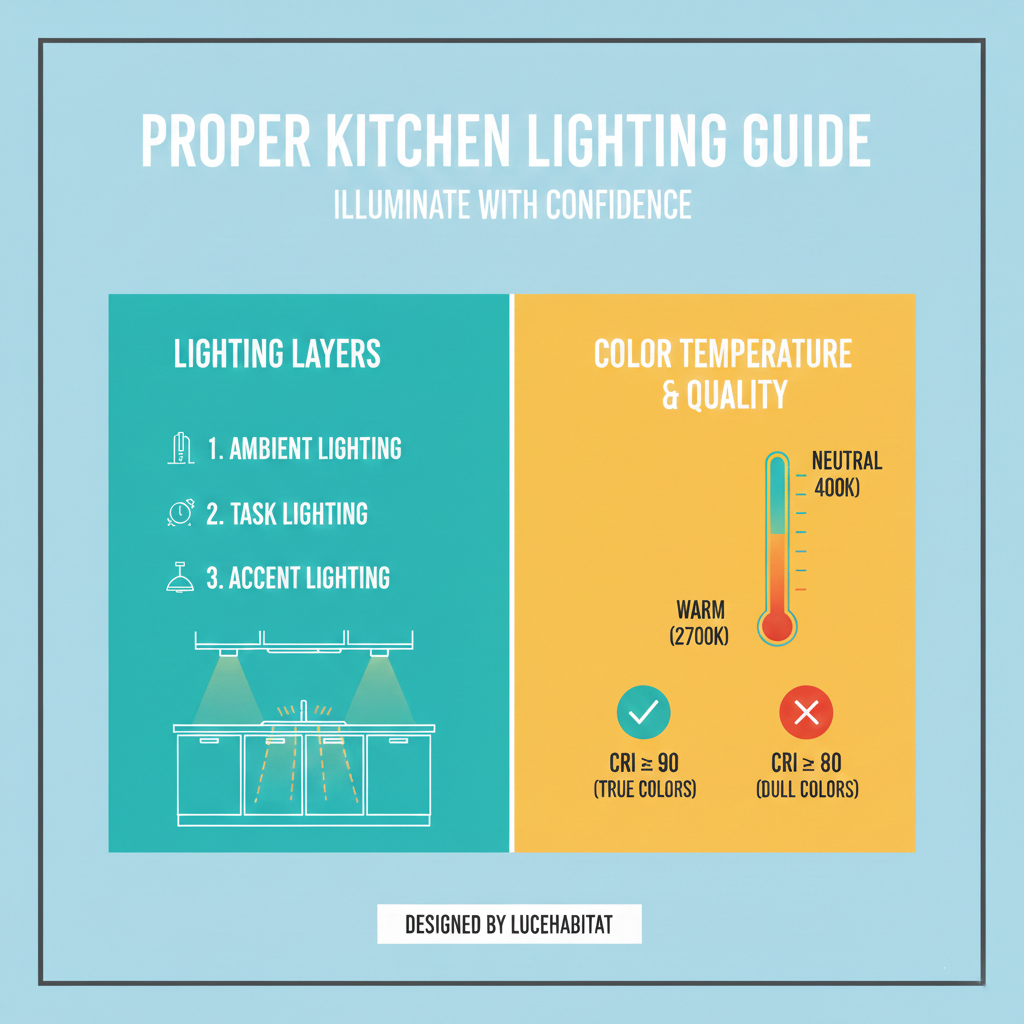
2. The 3 lighting layers in a kitchen
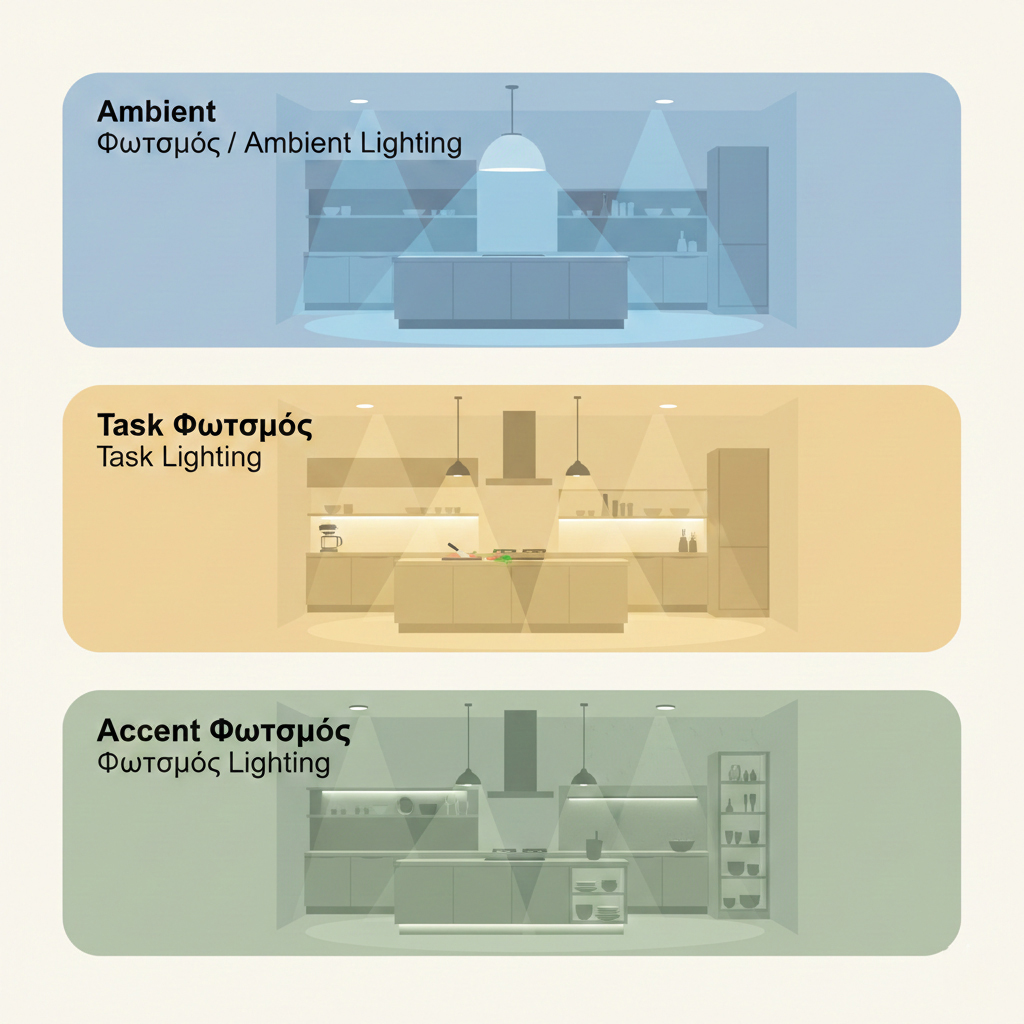
Proper kitchen lighting is not based on a single light source. It requires a combination of different lighting layers:
- Ambient lighting: General, uniform illumination throughout the space. Common solutions include ceiling lights or recessed downlights.
- Task lighting: The most critical layer. Used for worktops, sinks, and islands to eliminate shadows during food preparation.
- Accent lighting: Adds depth and character by highlighting cabinets, shelves, and architectural details.
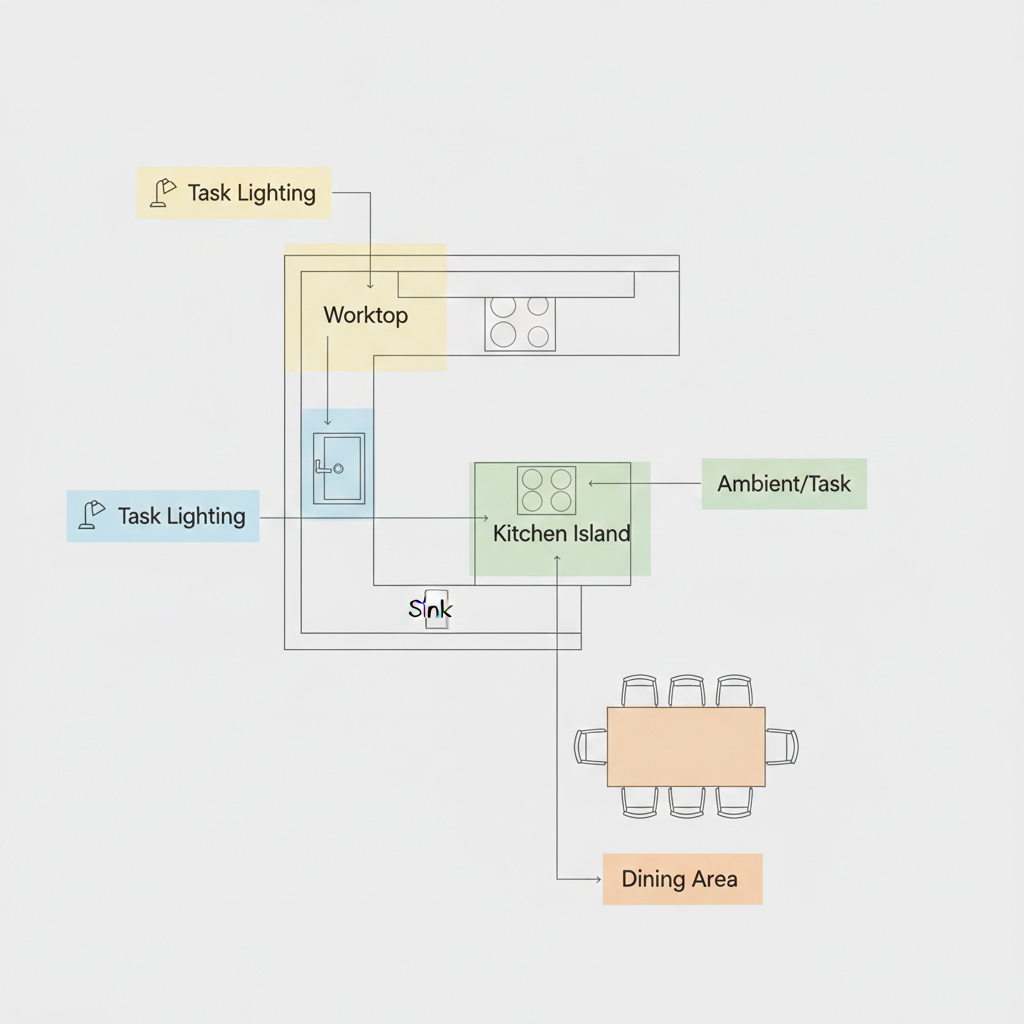
3. Key lighting zones in the kitchen
Worktops: Require strong, neutral light. LED linear lighting under wall cabinets is the most effective solution.
Kitchen island: Often combines function and design. Typically lit with pendant lights or suspended linear luminaires.
Dining area: Benefits from warmer, more atmospheric lighting.
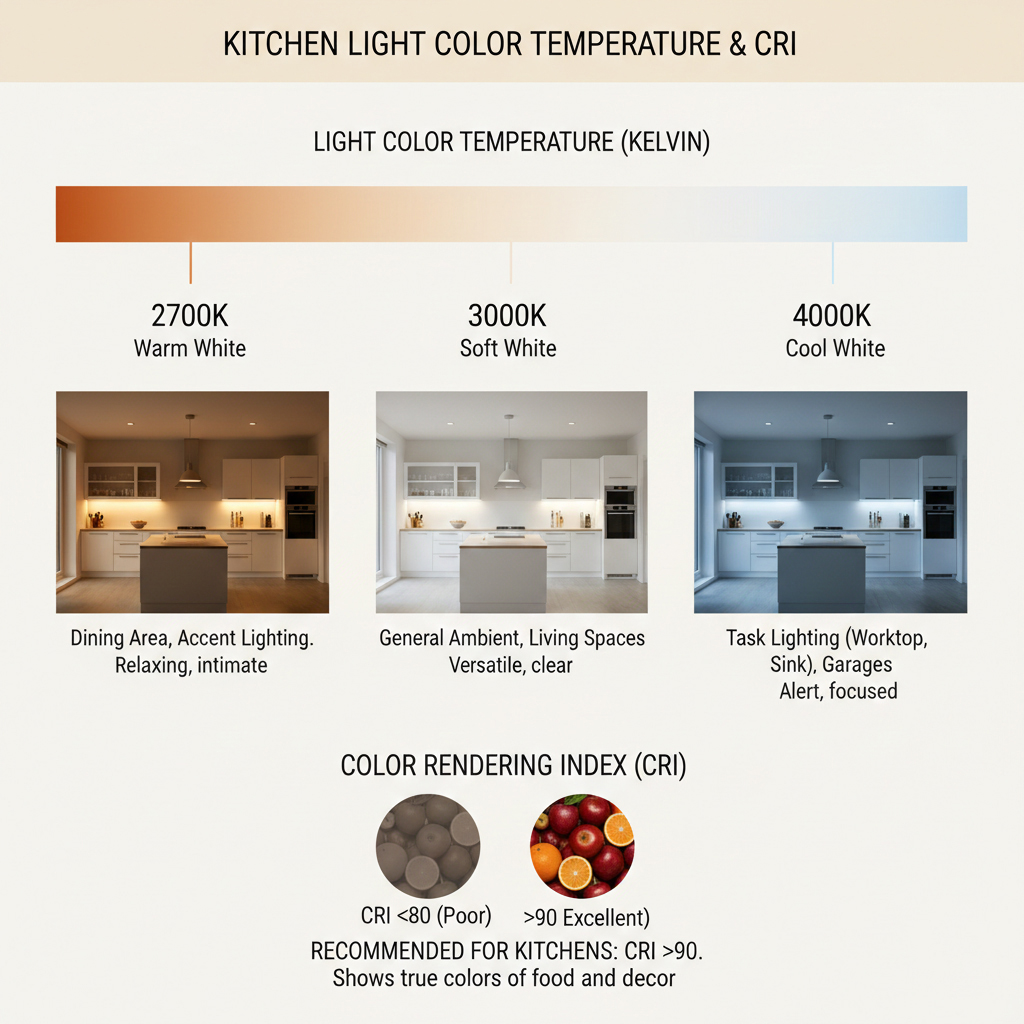
4. Light color temperature (Kelvin) and quality
- 2700K – 3000K: Warm light (ideal for dining areas).
- 3000K – 4000K: Neutral light (recommended for work surfaces).
For high-quality results, use CRI ≥ 90, so that food and materials appear natural and accurate.
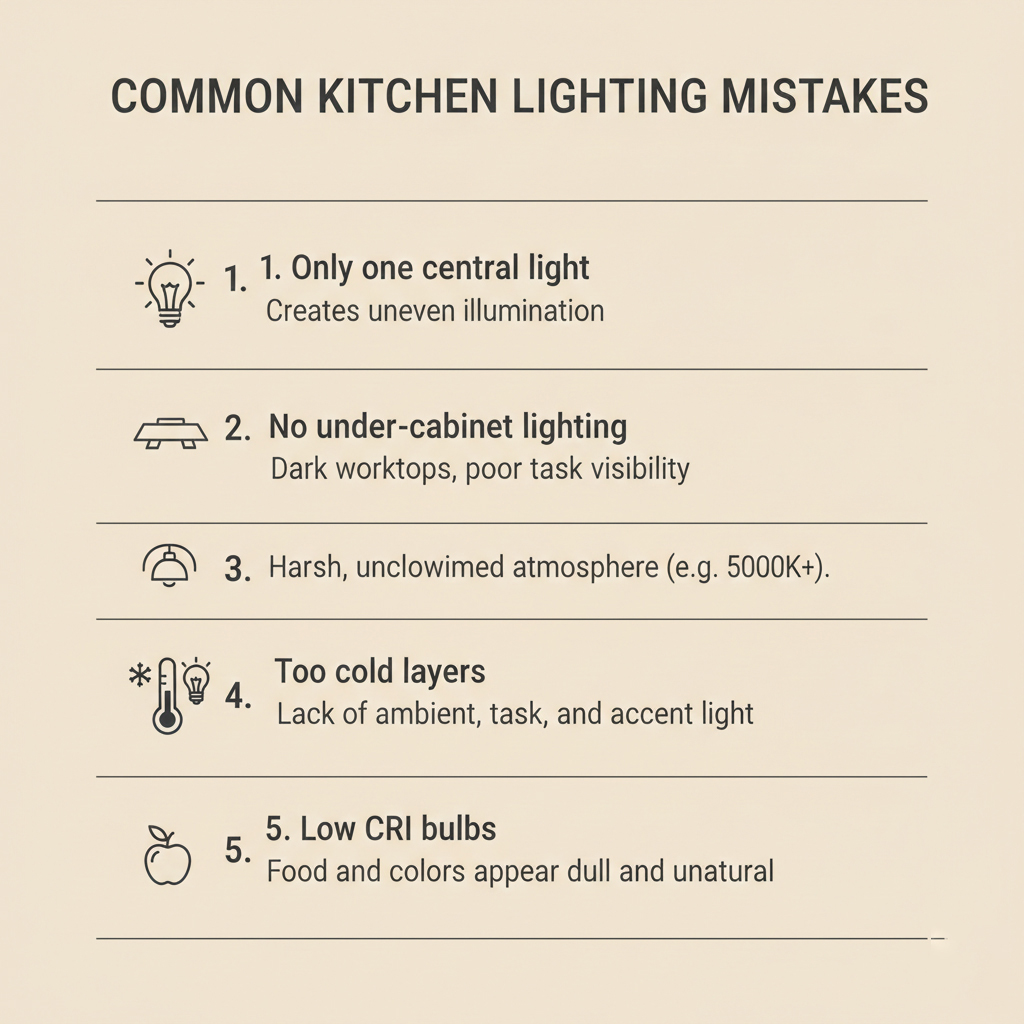
5. Common kitchen lighting mistakes to avoid
- Using only one central ceiling light.
- Lack of under-cabinet lighting.
- Choosing overly cold light for the entire space.
- Light fixtures that create shadows on work surfaces.
Remember: Proper lighting should be planned before installing the kitchen – not after.
Conclusion
With the right lighting design, the kitchen becomes more functional, comfortable, and visually refined. It is a combination of proper planning and suitable technology.